Traditional Chinese Medicine
Is a system of healing that has been used for thousands of years.
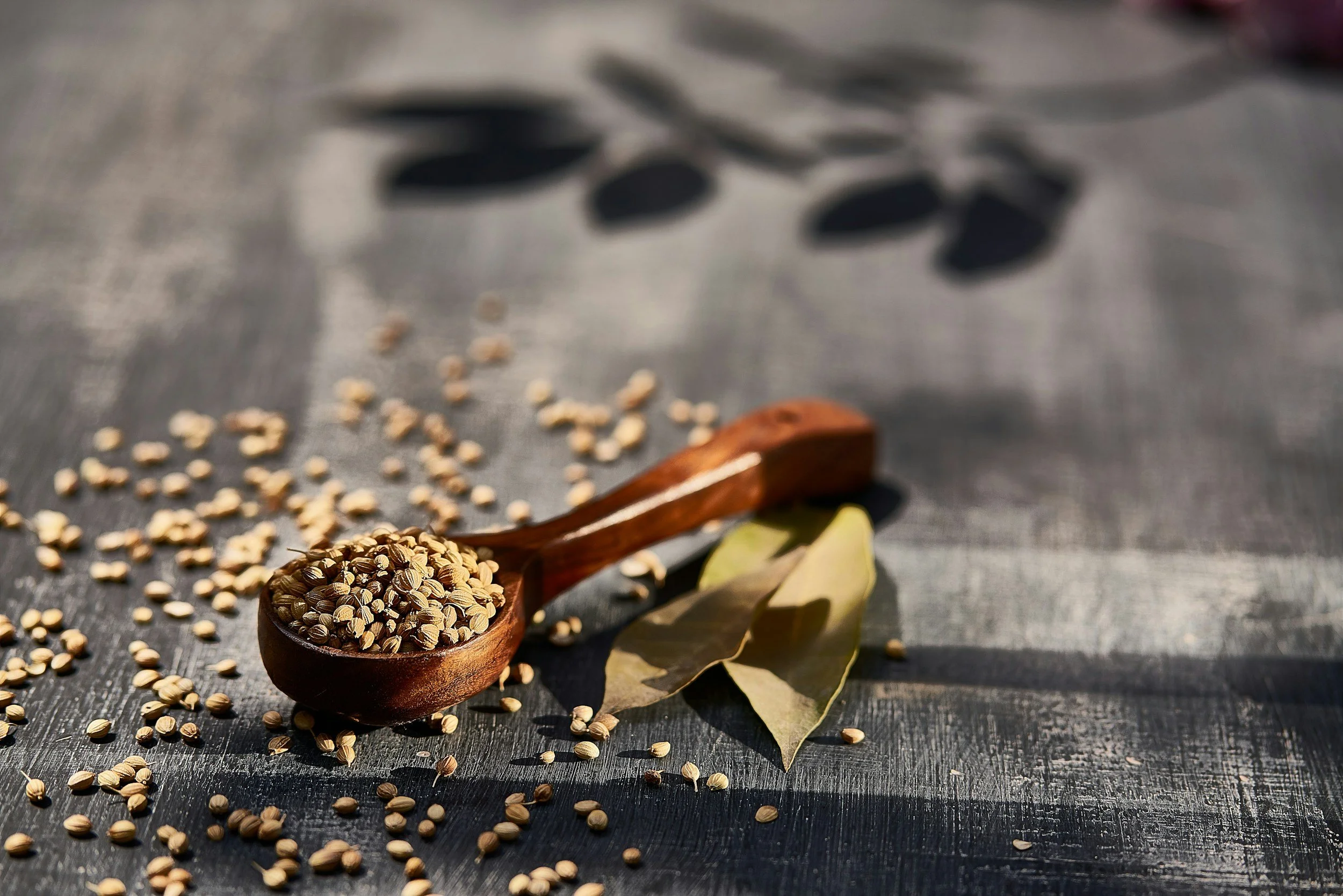
TCM blends the use of herbs and acupuncture to heal various ailments in the human body.
TCM philosophy is different from western medicine.
It sees the human body as an interconnected system that is connected with all of nature and the rest of the universe.
Any disease or pathology is a result of some imbalance between organ systems. Therefore treatment is aimed at correcting the pattern of imbalance found during assessment. This is achieved through strengthening and/or subduing specific organ systems with specific herbs, movement, rest and acupuncture.
TCM defines disease with terms like: excess, deficiency, stagnation, phlegm, wind, cold, heat, dampness, rising and sinking qi.
It diagnoses imbalances through tongue and pulse readings.
Although the methods, terminology and philosophy of TCM may differ from those in Western medicine, treatment goals and outcomes often overlap.
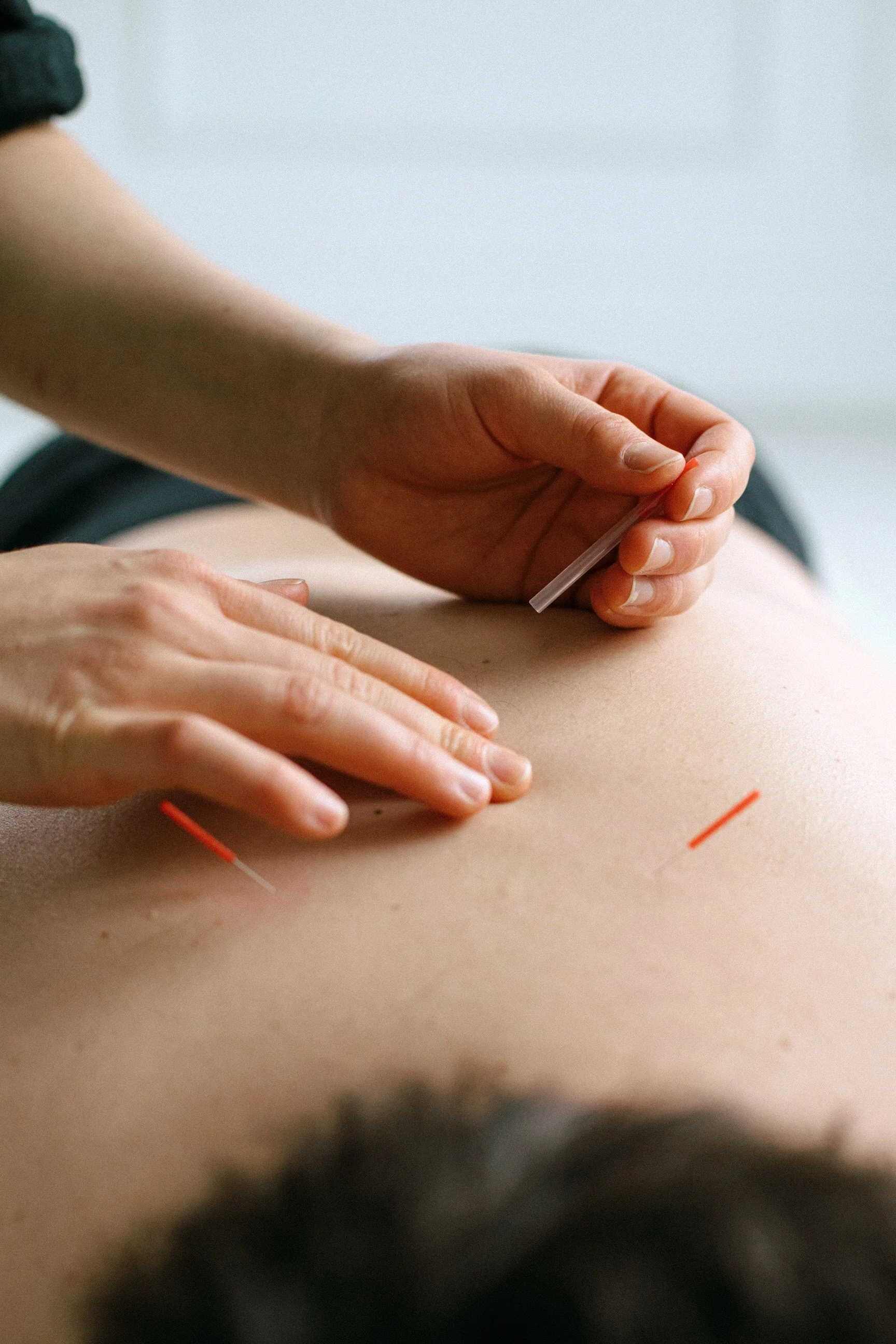
Acupuncture benefits
Use acupuncture for
✔ Dizziness and vertigo
✔ Respiratory or mild asthma support
✔ Headaches and migraines
✔Depression, grief, PTSD, stress
✔ Insomnia
✔ Abdominal bloating/digestive stagnation
✔ Bronchitis or mild asthma support
✔ Anxiety / irritability
✔Mild constipation/sluggish gut motility
✔ Menstrual cramps/tension
✔Fertility / post partum support
✔Dysmenorrhea / hormone balancing
✔ Menstrual cramps/tension
✔Constipation or diarrhea
✔Muscle spasms / pain/ trigger points
✔ Chronic fatigue or pain
✔ Smoking cessation
✔ Fibromyalgia

✔ Reduces pain
✔ Improves circulation
✔ Relaxes the nervous system
✔ Improves energy levels and reduces fatigue
✔ Reduces inflammation
✔ Reduces stress, anxiety, and depressive symptoms
✔ Improves sleep quality and helps with insomnia
✔ Supports digestive health
✔ Stress reduction
✔ Improves mood
✔ Supports respiratory conditions
✔ Balances hormones
✔ Enhances immune system function
✔ Reduces nausea and vomiting
✔ (TCM): restores balance of Qi and harmonizes organ systems

Contraindications
x Severe bleeding / clotting disorders
x Use of blood thinners
x Local infection or skin lesions at the needle site
x Severe cardiovascular conditions (uncontrolled hypertension, heart failure)
x Pregnancy (certain points should be avoided, especially in the abdomen and lower back)
x Severe immunosuppression or active systemic infection
x Needle phobia or severe anxiety
x Seizure disorders
x Acute fractures or injuries at the intended acupuncture site
x Extremely frail or elderly patients where tissue fragility is high
Cupping
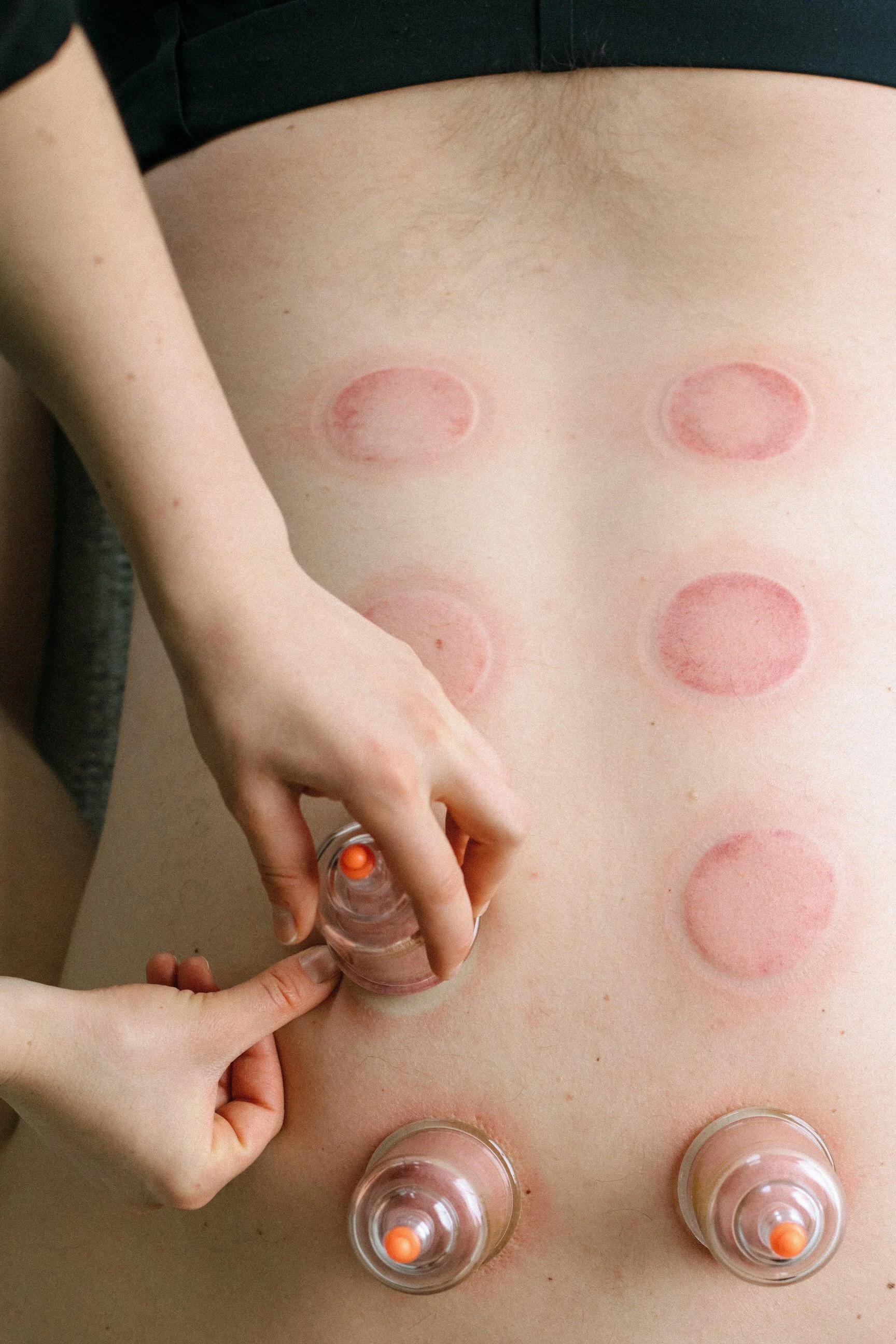
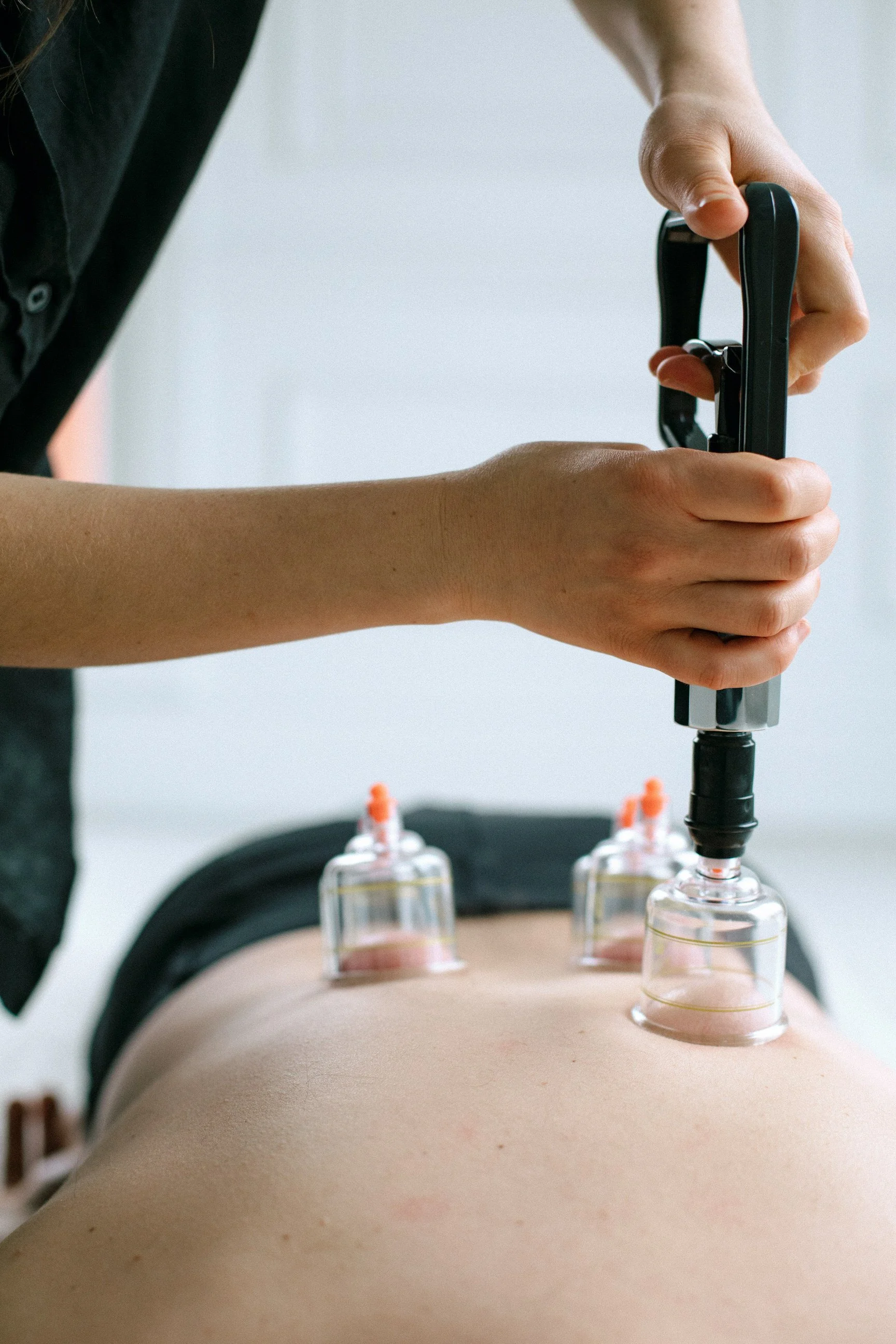
Cupping is a physical therapy used in traditional Chinese medicine, where suction is created on the skin. Glass, silicone or plastic cups are used pull the tissue upwards.
This decompression or “reverse massage” has several health benefits:
Stimulation of blood flow and circulation in the area
Stretches and breaks up fascia + adhesions
Pulls toxins and inflammatory molecules into circulation
Stimulates nerves to reset pain signalling
Stimulates immune response and healing
Cupping improves circulation, lymphatic flow, metabolic clearance, fascial adhesions, pain, stagnation and muscle tension.
It is a centuries-old therapy that can be used for a wide variety of health concerns.
While cupping is not painful or dangerous, it does have some contraindications which are listed below.
Cupping benefits
Use cupping for
✔ General tension and stress relief
✔ Bronchitis or mild asthma support
✔ Common cold or congestion
✔Performance recovery for athletes
✔ Post-injury rehabilitation
✔ Abdominal bloating/digestive stagnation
✔ Bronchitis or mild asthma support
✔ Anxiety / irritability
✔Mild constipation/sluggish gut motility
✔ Menstrual cramps/tension
✔Poor circulation
✔Headaches/migraines
✔ Menstrual cramps/tension
✔Neck pain, shoulder tension
✔Muscle spasms, trigger points
✔ Restricted range of motion
✔Sciatica / leg pain / joint stiffness
✔Fibromyalgia and myofascial pain
✔ Reduces pain
✔ Improves circulation
✔ Relaxes nervous system
✔ Improves mobility
✔ Supports recovery
✔ Muscle relaxation / reduced tension
✔ Fascia mobility / reduces adhesions
✔ Nervous system regulation
✔ Stress reduction
✔ Improves mood
✔ Supports respiratory conditions
✔ Menstrual and pelvic pain relief
✔ Enhances tissue recovery and healing support
✔ Improves lymphatic drainage and fluid movement
✔ (TCM): moves Qi and Blood to remove stagnation
Contraindications
x Open wounds, burns, or skin infections
x Severe bleeding or clotting disorders
x Use of blood-thinners
x Fractures or acute musculoskeletal injuries
x Severe varicose veins in the area to be treated
x Pregnancy
x Uncontrolled hypertension / heart failure
x Very thin, fragile, or elderly skin prone to tearing
x Eczema, psoriasis, or rashes in treatment area
x Fever or acute illness
What are the differences between glass, plastic and silicone cups?
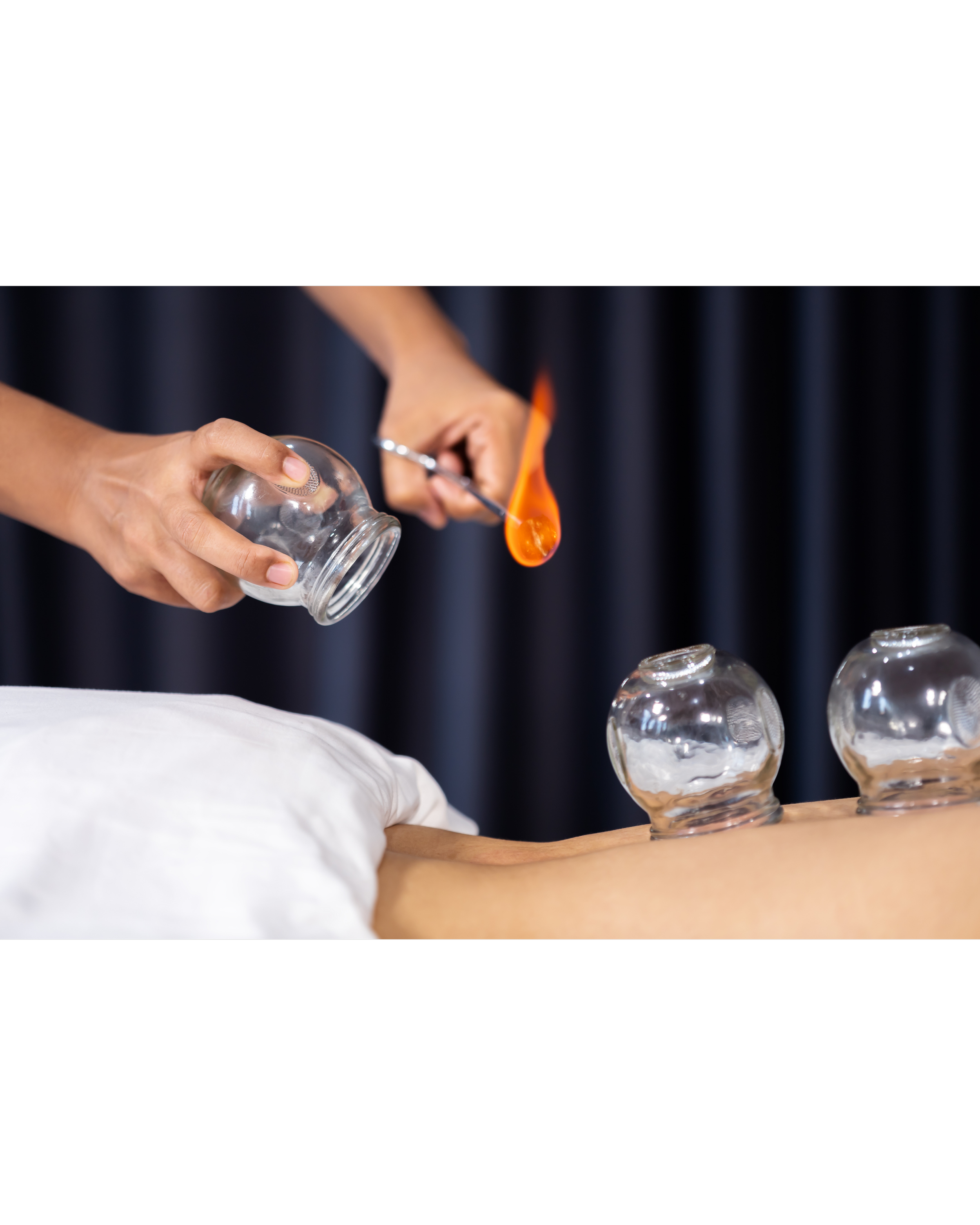
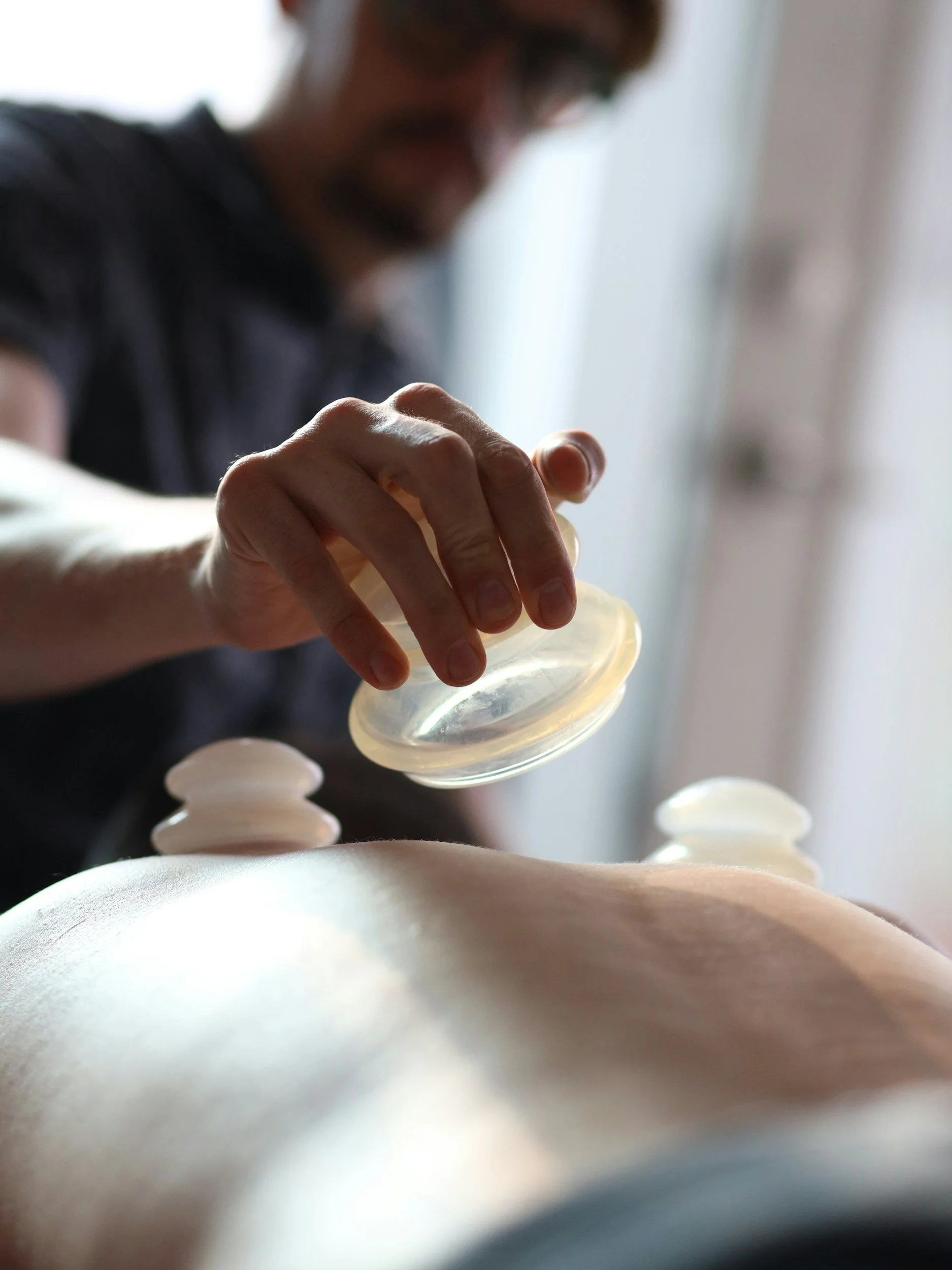
Glass cups use fire (live flame) to create suction.
This is the oldest, most traditional cupping method.
Glass cups create very strong suction, require more still to perform, are more sanitary- but also more breakable and heavier.
They may also feel more comfortable and “natural” on the skin.
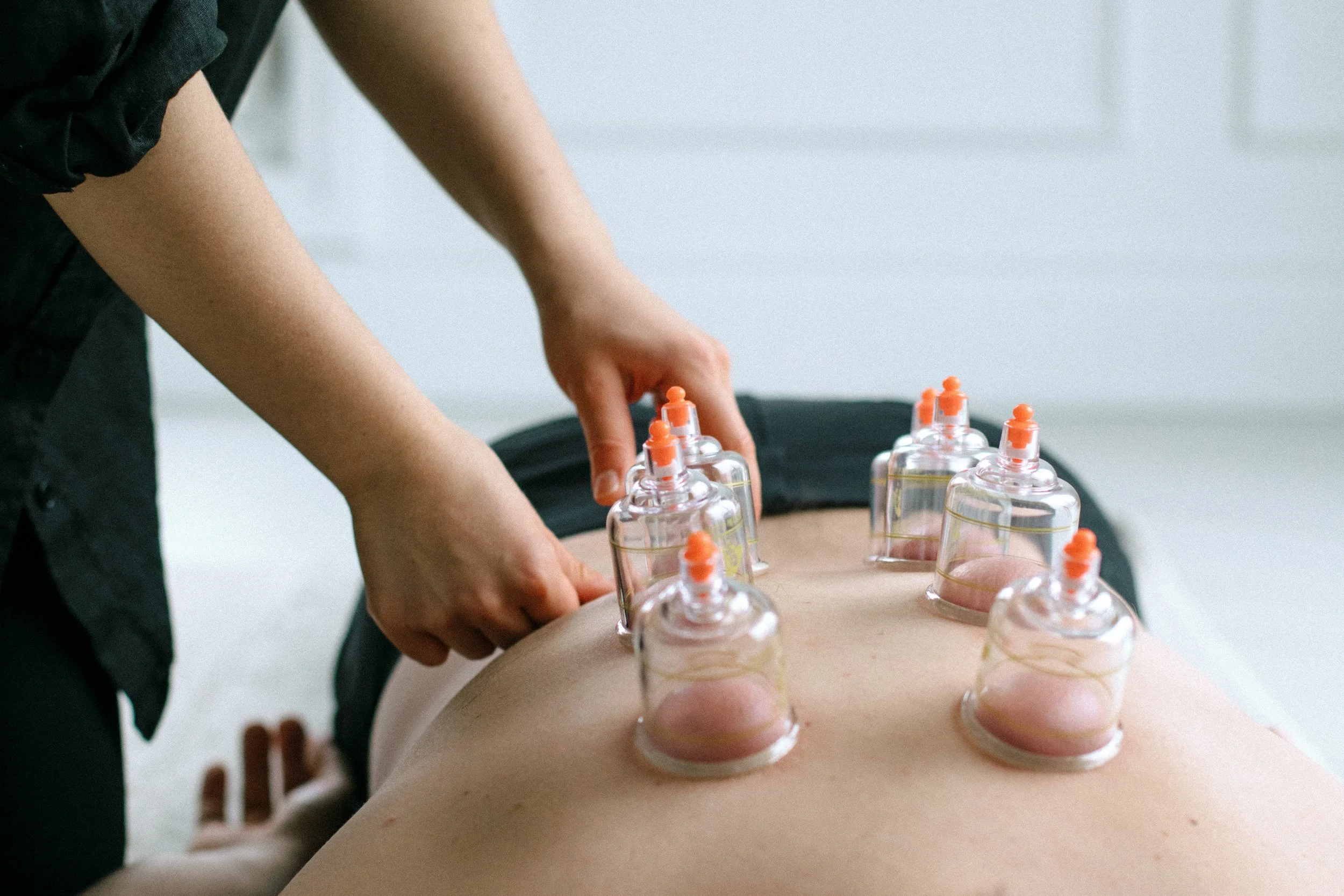
Plastic cups are most commonly used in modern clinics because they are lighter, less breakable, and more convenient to use.
They require a manual suction pump to create suction (no fire required), thus are also safer and require less skill.
They are less sanitary and durable than glass cups.
Silicone cups are soft and flexible, requiring no fire or suction pump to create suction.
They are the easiest to use, most beginner-friendly and best for at home use.
These cups are less durable and consistent, and provide the least amount of suction out of the three.
They are lightweight, safe and portable, but least commonly used in professional settings.
TCM acupuncture and cupping can be used in conjunction or independently to support health and optimize wellness.
These are self care techniques that can ameliorate a wide variety of conditions and/or symptom presentations.
While widely beneficial, these techniques are not suitable for everyone.
Book a discovery call today to find out if cupping or acupuncture is right for you!